

A Scholar, Her Cats, and the Case for Pet-Friendly Hong Kong

Nap time for Echo’s three fur children, from right to left: Meme, Tora, and Tara.

Wake up for a meal, from right to left: Tara, Tora, and Meme.
Dr Echo Shang Liang of the Department of Social Sciences and Policy Studies (SSPS) recalls a tough moment during her PhD research when her supervisor was checking on her progress and various deadlines were approaching. “At that time, it was my three pet cats who ‘made sure that’ I completed all tasks on time,” she said. For her, their presence was more than companionship; it was a source of emotional stability during a demanding period of study.
“PhD studies can be a lonely journey of collecting and analysing data, writing up and amending. It was my three cats who saw me through many long nights of research. Meme always kept me company when I worked, usually by sitting right on my papers,” said Echo.

Meme kept Echo company while she worked, often sitting right on her papers.
During her PhD, Echo fostered three cats, Meme, Tara, and Tora, out of a love for animals. She explained that she chose to foster rather than adopt at first because she was uncertain whether she would remain in Hong Kong after completing her PhD. She did stay in the city after finishing her doctorate, and later joined FLASS in 2023.
Over time, Echo developed strong bonds with her three cats. When the NGO asked her to hand the cats over to adoption families, Echo became reluctant to let go. “I decided to adopt them without much hesitation,” said Echo, who, like many pet owners in Hong Kong, calls herself a “fur parent”, a term of endearment for someone who treats their pets as family.

From the top of the cat bed, Meme kept a watchful eye on the whole house, including Echo. It was all tears when he passed away last year at the age of eight.
Each of Echo’s fur children has its own story. Meme was a sweet boy who was abandoned in Kowloon Tong and rescued by a volunteer. Sadly, he passed away last year at the age of eight. Tara and Tora are sisters who were abandoned in To Kwa Wan when many of its old neighbourhoods were cleared for urban renewal. “Named after To Kwa Wan, Tara and Tora were only about seven or eight months old when rescued by volunteers. Now, they are nine,” Echo said.
Meme, Tara, and Tora are all 唐貓 (local mixed-breed cats). “They are smart and affectionate, yet often passed over by adopters who only want pedigree cats. To me, they are my family members,” she said.

Left: Echo, pictured with her pet dog Bei Bei at her family home. Bei Bei is now sixteen years old. Right: Bei Bei, wearing her sunglasses, enjoying a picnic on the grass.
Echo began her connection with animals before pursuing her doctoral studies in Hong Kong. “When my parents found Bei Bei in my home city of Guiyang, she had been abandoned on a rooftop, just one year old and pregnant with six puppies. She has been with my original family since then, and has grown old alongside us. She is now sixteen,” she said.
For Echo, raising pets provides both emotional support and academic inspiration. From 9 July, dogs are allowed to enter permitted food premises in Hong Kong. Echo said the new policy is welcomed by “fur parents”, but she also noted that some people criticise pet-friendly restaurants simply because they do not like dining next to dogs.
Recently, she initiated a new project on how restaurants implement pet-friendly policies in Hong Kong. To observe what “pet-friendly” really means in practice, Echo brought her sister’s pet dog to dine at restaurants. “While some restaurants truly welcome pets, others use the ‘pet-friendly’ tag to attract customers, without actually being friendly to fur parents and their pets” she said.
Pet-friendliness should mean more than coexistence. It should mean mutual respect and appreciation.
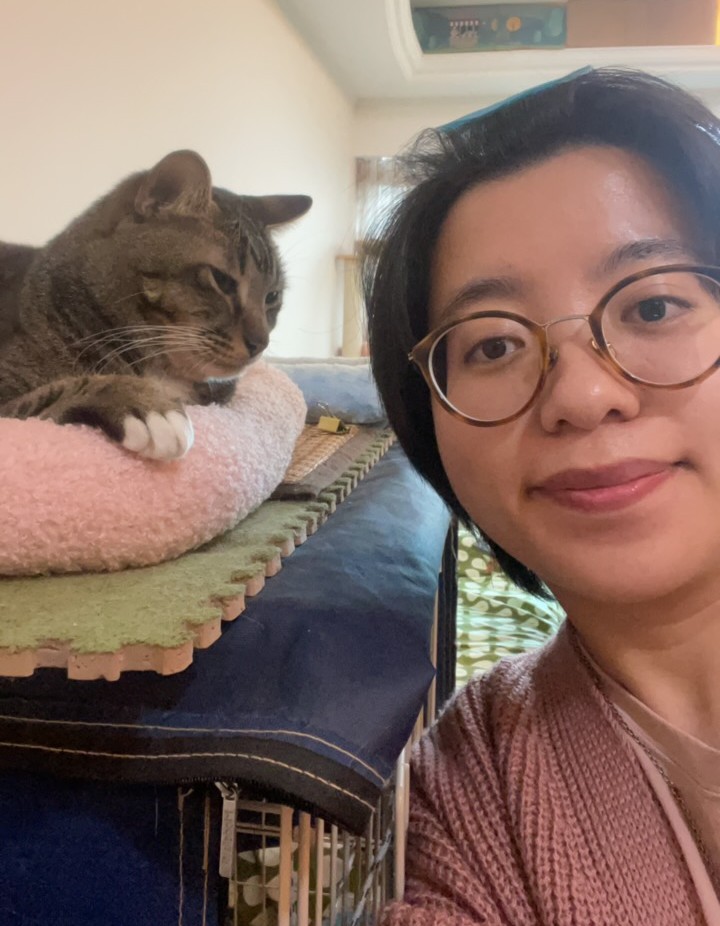
Echo believes that pet-friendliness, or inclusion from a broader perspective, should mean more than coexistence: it should mean mutual respect and appreciation. “Hong Kong is transitioning into a pet-friendly society. I think now is the critical time for more discussions on what true pet-friendliness and inclusion mean,” she said.
In her spare time, Echo volunteers at adoption events run by the Hong Kong Saving Cat and Dog Association (香港拯救貓狗協會) (Note). Spending a day helping rescued dogs meet their future families is her favourite escape from busy work. Sadly, it is becoming increasingly difficult for them to find new homes in Hong Kong.
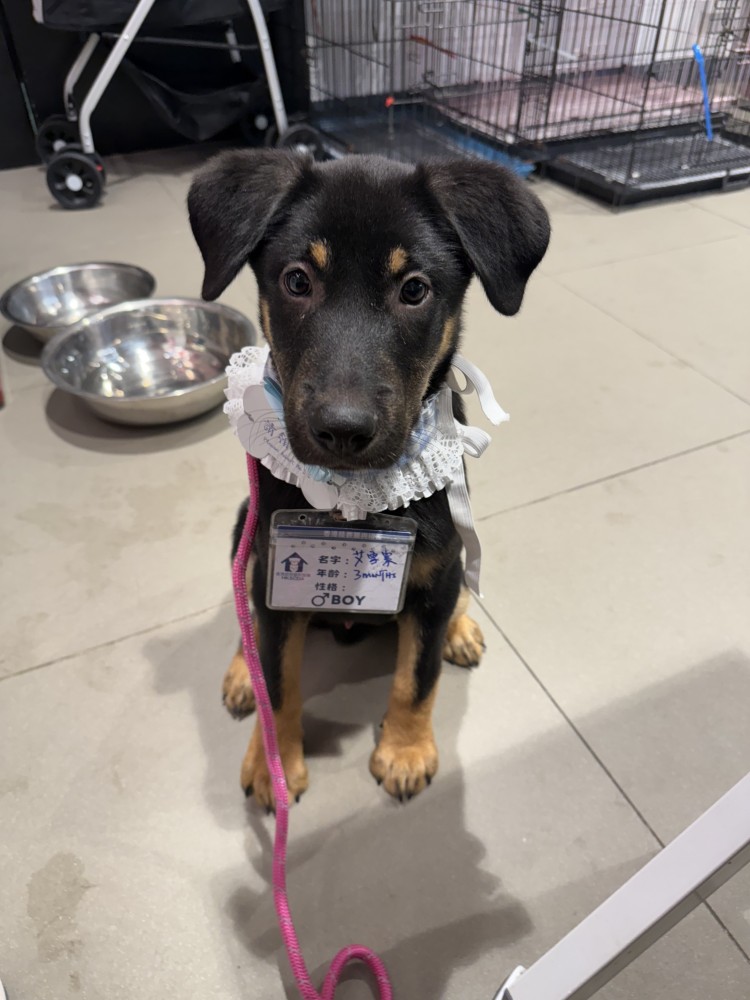
“More pets have been abandoned as more people have left Hong Kong in recent years, and many people now prefer pedigree cats and dogs, which have become increasingly available in the market. Large-scale development and redevelopment projects have also displaced many community animals. If their stories touch you, please consider adopting or becoming foster parents. Give a local 唐狗 (local mixed-breed dog) or 唐貓 (local mixed-breed cat) the chance to have a family,” she said.
Note: The Hong Kong Saving Cat and Dog Association (HKSCDA) is a local NGO which rescues abandoned, stray, and abused animals, and provide them with food, medical care, neutering, and adoption services.
